Getting store traffic but no sales? Discover why your e-commerce website isn’t converting visitors into buyers and how to optimize your store for revenue.
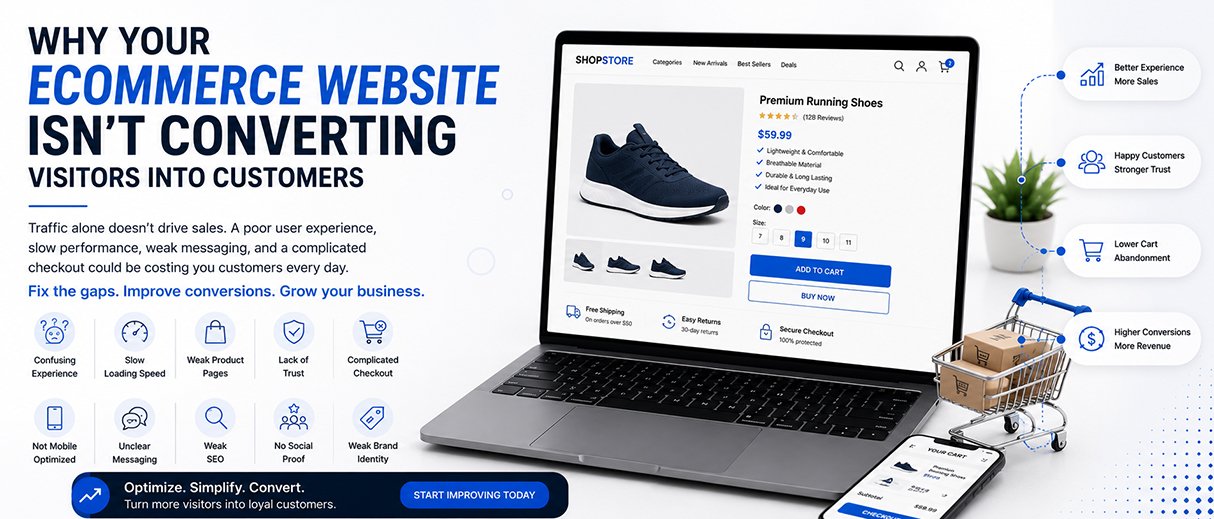
Getting traffic to your ecommerce website is only part of the equation. If visitors are landing on your store but not making purchases, the real issue is conversion.
Many ecommerce businesses invest heavily in ads, social media marketing, and SEO, yet still struggle to turn visitors into paying customers.
In today’s competitive online market, customers expect more than just products. They expect a smooth shopping experience, fast-loading pages, clear messaging, trust, and convenience.
Even small issues on an ecommerce website can impact customer decisions and reduce sales.
The good news is that most conversion problems can be identified and improved with the right strategy.
One of the biggest reasons ecommerce websites fail to convert is poor user experience.
If customers cannot quickly find products, navigate pages easily, or understand your website layout, they are more likely to leave without making a purchase.
A strong ecommerce experience should feel:
Customers should be able to move through the buying process without confusion or frustration.
Complicated navigation, cluttered pages, and unclear calls-to-action can quickly reduce conversions.
Fast website performance can directly influence the overall shopping experience and online sales results.
Online shoppers expect websites to load quickly. If pages take too long to appear, customers often leave before browsing products.
Slow-loading websites can negatively impact:
Common causes of slow ecommerce websites include:
A faster website creates a smoother shopping experience and improves customer engagement.
Product pages are one of the most important parts of any ecommerce website.
If product pages lack detail, trust, or clarity, customers may hesitate to purchase.
Strong product pages should include:
Customers want confidence before making purchasing decisions.
Detailed and informative product pages can significantly improve conversion rates.
Trust is one of the biggest factors in ecommerce success.
Customers are less likely to purchase from websites that appear outdated, unprofessional, or unreliable.
An ecommerce website should clearly communicate credibility through:
Building trust helps reduce hesitation during the buying process.
A complicated checkout experience is one of the leading causes of abandoned carts.
If customers encounter unnecessary steps, account requirements, or confusing forms, they may leave before completing their purchase.
A strong checkout experience should be:
Businesses can improve conversions by:
A smoother checkout process can have a major impact on ecommerce sales.
A large percentage of ecommerce traffic now comes from mobile devices.
Customers expect online stores to function smoothly across smartphones and tablets.
If your ecommerce website is difficult to use on mobile devices, customers are more likely to leave without purchasing.
Mobile optimization should include:
A poor mobile experience can hurt both conversions and customer trust.
Customers should immediately understand:
Weak messaging can create confusion and reduce customer confidence.
Strong ecommerce messaging should feel:
Businesses that communicate value effectively often create stronger engagement and higher conversions.
SEO helps ecommerce businesses attract qualified traffic from search engines.
Without proper ecommerce SEO, businesses may struggle to attract visitors who are actively searching for products online.
Strong ecommerce SEO includes:
SEO not only improves traffic but also helps attract customers with stronger buying intent.
Customers often rely on reviews, ratings, and customer experiences before making purchases.
Social proof helps businesses appear more trustworthy and reliable.
Examples of social proof include:
Businesses that display authentic customer experiences often improve conversion rates.
Effective branding can significantly impact how customers perceive and engage with an ecommerce business.
Customers are more likely to purchase from brands that feel professional, recognizable, and trustworthy.
A strong ecommerce brand includes:
Branding helps businesses stand out in competitive ecommerce markets.
Improving ecommerce conversions requires a combination of strategy, optimization, and customer experience improvements.
Businesses can improve performance by:
The goal is to create an ecommerce experience that feels smooth, trustworthy, and easy for customers.
Driving traffic to an ecommerce website is important, but traffic alone does not guarantee sales.
Successful ecommerce businesses focus on creating strong user experiences, building trust, improving website performance, and simplifying the customer journey.
Even small improvements in website speed, messaging, product pages, and checkout experience can make a significant difference in conversion rates.
Businesses that continuously optimize their ecommerce experience are more likely to increase customer engagement, improve online sales, and achieve long-term digital growth.
Book a free strategy call and let's talk about your goals.
Book Free Strategy Call