Learn why businesses get website traffic but not enough leads, and discover practical ways to improve targeting, messaging, landing pages, and conversions.
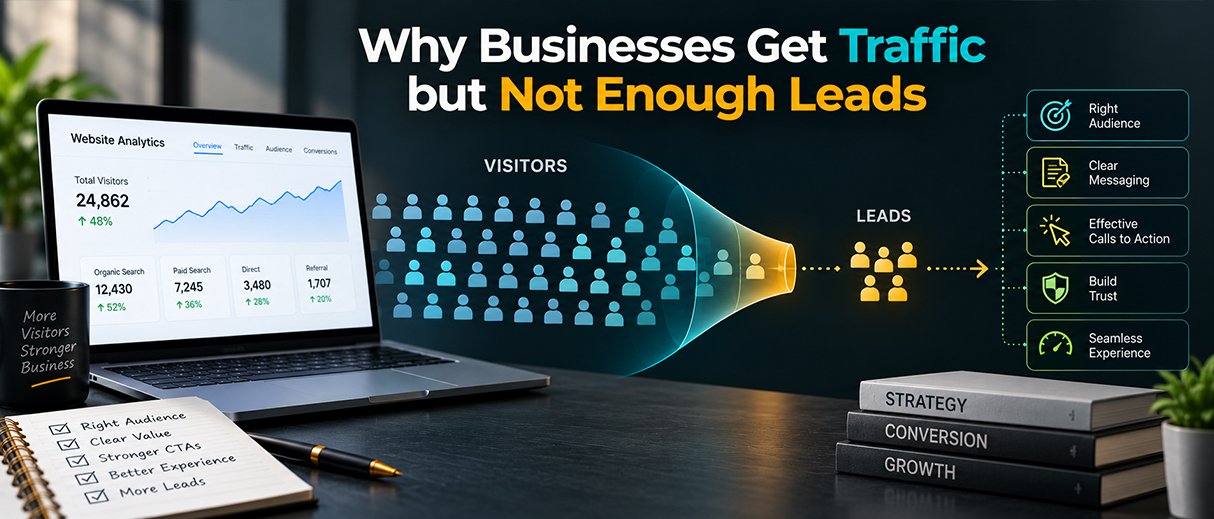
Your website traffic is increasing, yet enquiries have barely changed. Traffic can feel like progress, but visitors alone do not create revenue.
Businesses can get traffic without enough leads when the wrong people are visiting, the website does not clearly communicate value, important conversion paths are difficult to find, or the experience gives visitors little reason to take the next step. Improving lead generation requires looking at the entire journey, not traffic volume alone.
Traffic and leads represent different stages of the customer journey. A visitor has simply reached your website. A lead has taken an action, such as requesting a quote, booking a consultation, submitting a form, calling, or starting a conversation.
That is why a site can receive hundreds or thousands of visits while producing disappointing business results.
The better question is: Are the right people arriving, and can they easily take the next step?
Before changing your website, examine the quality of the traffic it receives.
Broad keywords, poorly targeted advertising, or content aimed at researchers can bring visitors who have little intention of becoming customers. A visitor might be interested in your industry but have no immediate need for your service.
Review:
A smaller volume of qualified visitors can be more valuable than a much larger audience with little buying intent.
When someone lands on a page, they should quickly understand what the business offers, who it serves, and what makes the service worth considering.
Potential leads can disappear when a page uses vague messaging, hides important information, or makes visitors read too much before understanding the offer.
A strong page should make clear what you offer, who it is for, what problem you solve, why you are worth considering, and what the visitor should do next.
This matters especially for visitors arriving from search engines or advertisements. They may have little previous knowledge of your brand, so clarity needs to come early.
Interested visitors need a clear next step.
A website may have a contact form, but that does not mean the conversion path is effective. A small link buried in navigation or a generic button may not give visitors enough direction.
Depending on the business, stronger calls to action could include:
The goal is not more buttons. It is a clear, relevant next action.
Sending every visitor to the homepage can create unnecessary friction, particularly with paid advertising.
If someone clicks an advertisement for a specific service, the destination page should continue the same conversation. The offer, message, and call to action should feel connected.
A focused landing page can create a clearer path:
Traffic source → relevant message → offer → trust → action
When the page immediately relates to what the visitor searched for or clicked, the journey becomes easier to understand.
People want confidence that the business can deliver what it promises.
Trust can be strengthened through:
You do not need exaggerated claims or dozens of testimonials. Useful evidence placed at the right point in the customer journey can help visitors feel more comfortable taking action.
Sometimes the visitor is interested, but the website makes contacting the business inconvenient.
Common friction points include slow pages, confusing navigation, poor mobile layouts, long forms, broken links, intrusive pop-ups, and too many steps before contact.
Removing unnecessary obstacles can make the journey easier without requiring a complete website rebuild.
Not every visitor who reads a blog is ready to buy. Someone searching for information may be several steps away from making a decision.
Relevant internal links can move readers from educational content toward service pages, case studies, or other useful resources.
For example, a blog about website performance can naturally lead a reader toward a web development service if that visitor realizes their own website needs professional attention.
The goal is to create a logical path through the website rather than letting the visitor’s journey end at the bottom of an article.
Another possibility is that the business has a measurement problem rather than only a lead problem.
If you monitor sessions and page views but do not track meaningful actions, it becomes difficult to identify what is actually working.
Depending on the business, useful conversion events can include:
Once these actions are measured, you can compare traffic sources and pages based on business outcomes rather than visits alone.
1. Attract the right audience
Review SEO keywords, advertising audiences, social content, referrals, and other acquisition sources.
2. Match visitor intent
Make sure the page answers the need that brought the visitor there.
3. Build confidence
Use clear information, proof, professional presentation, and answers to common concerns.
4. Make the next step obvious
Give visitors a relevant action that matches their stage in the decision process.
5. Measure and improve
Track conversions, identify where people drop off, test focused improvements, and repeat.
This process helps businesses address the actual bottleneck instead of continually chasing more traffic.
Start with high-traffic, low-conversion pages. These pages can reveal where the customer journey is breaking down.
Make service pages specific. Explain the audience, problem, solution, process, and next step.
Keep forms practical and mobile-friendly. Ask only for information you need initially, and make the conversion path easy on smaller screens.
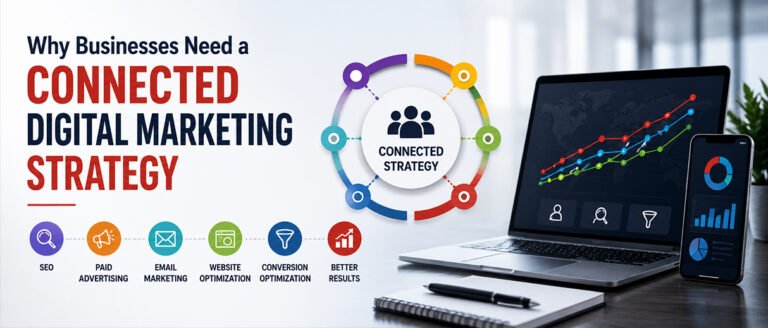
Connect your channels. SEO, paid advertising, website content, and branding should support one consistent customer journey.
The biggest mistake is assuming more traffic will automatically create more leads. If the conversion experience is weak, additional visitors may create more missed opportunities.
Another mistake is redesigning the website before identifying whether the real problem is targeting, messaging, or conversion.
Changing several elements at once creates another problem: you cannot easily tell what caused an improvement or decline.
A better approach is to identify the biggest constraint, make a focused change, measure the result, and continue.
Before increasing your marketing budget, ask:
The most common reasons are poor traffic quality, unclear messaging, weak calls to action, trust gaps, difficult contact processes, or a mismatch between visitor intent and the page they reach.
Not necessarily. Traffic is useful when it comes from people who fit your target audience and have a realistic chance of becoming customers.
Traffic creates opportunities, but qualified leads are usually the more useful business outcome.
Yes. SEO can attract people looking for information rather than services. Strong SEO should consider search intent and connect useful content with relevant commercial pages.
Yes. Targeting, offer quality, ad messaging, landing-page relevance, and the conversion experience can all affect lead generation.
It can when the existing site has problems with messaging, navigation, mobile usability, trust, or conversion paths. A redesign should be based on identified problems rather than appearance alone.
Start by reviewing traffic quality, high-traffic pages, messaging, calls to action, forms, mobile experience, trust signals, and conversion tracking. Then improve the biggest constraint first.
There is no single rate that works for every business. Lead quality, industry, traffic source, offer, and sales process all influence the number of visitors who become leads.
No. The right conversion option depends on the page and visitor intent. Some pages may need a form, while others may work better with a call, booking link, or service-page CTA.
Track meaningful conversions and connect them to their acquisition sources. Comparing leads by source, quality, and eventual business value gives a more useful picture than comparing traffic alone.
Getting visitors to your website is only one part of digital marketing. The real opportunity begins when those visitors understand your offer, trust your business, and have a clear reason to take the next step.
If traffic is growing but leads are not, the answer is not always “get more traffic.” Examine the quality of your audience, the relevance of your landing pages, your messaging, trust signals, conversion paths, and tracking.
Citeno takes this broader view by connecting digital marketing, websites, and brand development around the customer journey. When the right audience reaches a website that clearly communicates value and makes action easy, traffic has a much better chance of becoming a meaningful business opportunity.
Book a free strategy call and let's talk about your goals.
Book Free Strategy Call