
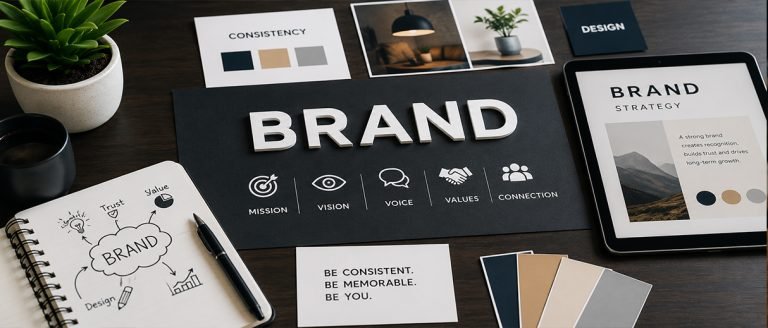
Learn why successful brand development extends beyond logo design. Discover how brand strategy, messaging, visual identity, and consistency help businesses build trust, recognition, and long term customer relationships.
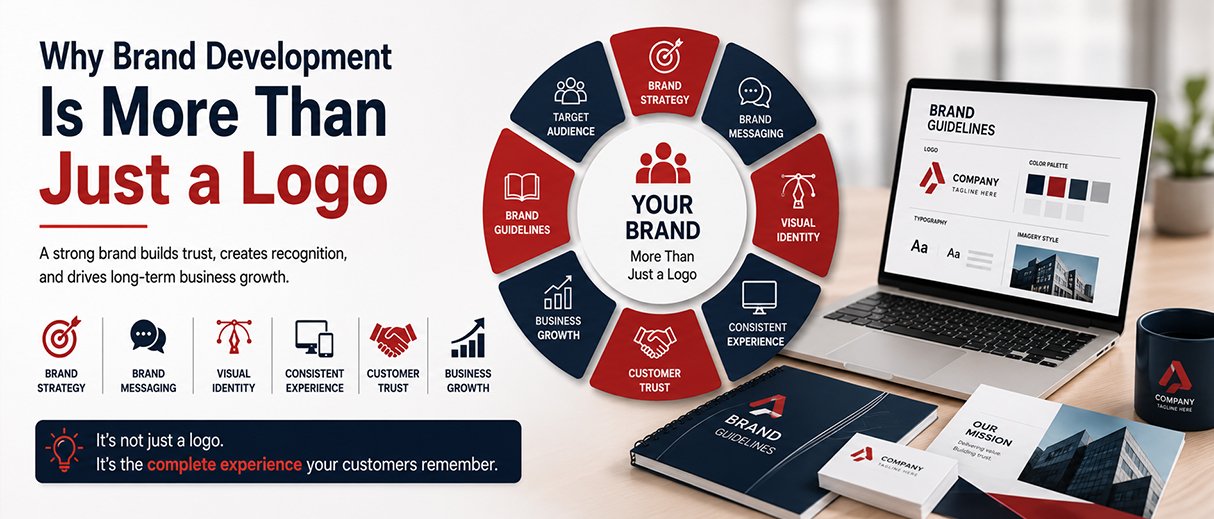
Every business wants to be recognized, trusted, and remembered. Yet many companies believe that creating a logo is enough to establish a brand. While a professionally designed logo is an important part of your visual identity, it represents only a small piece of what customers experience when they interact with your business.
A brand is the complete perception people develop about your company. It is shaped by your messaging, visual identity, customer experience, website, marketing campaigns, and every interaction someone has with your business. Before a potential customer speaks with your sales team or requests a quote, they have already formed an opinion based on how your brand is presented.
For B2B businesses, where buying decisions often involve research and multiple stakeholders, a strong brand can become a competitive advantage. It builds confidence, differentiates your business from competitors, and creates consistency across every customer touchpoint. Brand development is not simply about designing attractive visuals. It is about creating a strategic foundation that supports long term business growth.
Think of your logo as the face of your business. It helps customers recognize your company, but recognition alone does not create trust or influence purchasing decisions.
Imagine two businesses offering similar services. Both have professionally designed logos, but one communicates a clear message, maintains a consistent visual identity, and delivers the same experience across its website, social media, proposals, and marketing materials. The other uses different colors, inconsistent messaging, and outdated visuals across different platforms.
Most customers naturally feel more confident choosing the business that presents itself consistently because it appears organized, professional, and reliable.
Your brand is built through every interaction, not through a single design element.
Successful businesses know exactly who they are, who they serve, and how they want to be perceived in the marketplace. Brand development helps define these fundamentals before marketing campaigns begin.
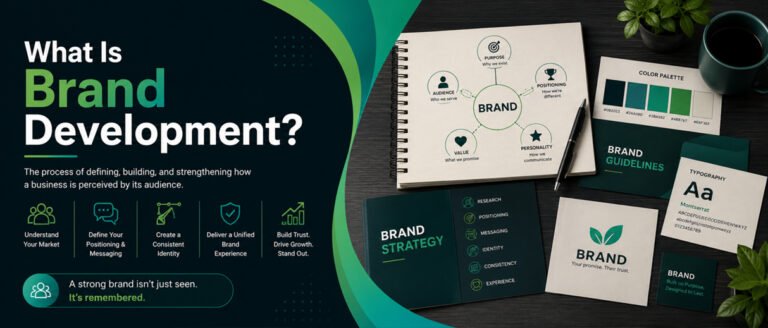
A comprehensive brand development process typically includes:
When these elements work together, businesses communicate with clarity instead of sending mixed messages across different channels.
Without this strategic foundation, marketing often becomes inconsistent because every campaign communicates something slightly different.
Many companies invest in advertising before defining what makes them different. This often results in campaigns that generate visibility but fail to create lasting recognition.
A strong brand strategy answers important questions such as:
When these questions are answered early, every marketing decision becomes easier. Website content, social media, paid advertising, email campaigns, and sales presentations all communicate the same message, creating a stronger and more memorable customer experience.
Customers interact with businesses through multiple digital and offline touchpoints. They may visit your website, read your social media posts, receive an email, download a brochure, or meet your team before making a purchasing decision.
If every interaction feels different, customers begin to question the professionalism of the business.
Consistent branding creates familiarity. Familiarity builds trust, and trust influences buying decisions.
Every customer touchpoint should reflect the same brand personality, visual style, and communication approach so your business remains familiar and recognizable wherever people encounter it.
Businesses that maintain consistency are often easier to recognize, easier to remember, and easier to trust.
Marketing performs better when supported by a clearly defined brand.
Search engine optimization attracts visitors to your website. Paid advertising increases visibility among potential customers. Social media creates engagement, and email marketing helps maintain relationships with prospects. However, if every channel communicates a different message or presents a different visual identity, marketing efforts become less effective.
A well developed brand creates consistency throughout the customer journey. Visitors who discover your business through search engines should experience the same professionalism when they visit your website, view your advertisements, or interact with your content on social media.
Instead of relying on repeated promotions to stay memorable, businesses with strong branding leave a lasting impression through consistent communication and recognizable identity.
As businesses expand, more people become involved in creating marketing materials. Internal teams, designers, content writers, advertising specialists, and external agencies all contribute to the brand experience.
Without clear brand guidelines, every new piece of communication can begin to look and sound different.
Brand guidelines establish standards for logo usage, typography, color palettes, imagery, messaging, and tone of voice. They help ensure that every presentation, advertisement, website update, and marketing campaign reflects the same professional identity.
This consistency becomes even more valuable as businesses enter new markets, launch new services, or expand their teams.
Brand development is often viewed as a creative project, but its impact extends far beyond design.
A strong brand supports customer trust, improves recognition, strengthens marketing performance, and creates a more professional business presence. It also helps employees communicate consistently, makes marketing campaigns more effective, and positions the business more clearly within its industry.
Unlike short term marketing campaigns that end after a specific period, a well developed brand continues to deliver value across every customer interaction.
Businesses that invest in their brand today create a stronger foundation for future growth, making it easier to attract customers, build loyalty, and compete in increasingly crowded markets.
Your logo may introduce your business, but the reputation you build through consistent experiences is what defines your brand.
True brand development combines strategy, messaging, visual identity, and consistency to create meaningful experiences that customers remember. Every interaction, from your website and marketing campaigns to your sales presentations and customer communications, contributes to how your business is perceived.
Companies with a clearly defined brand stand out because they communicate with confidence, maintain consistency, and build trust long before the first sales conversation takes place.
When businesses invest in professional brand development, they are not simply creating a new look. They are building a market ready identity that supports stronger marketing, better customer relationships, and sustainable business growth.
Brand development is the process of creating a complete business identity that includes brand strategy, positioning, messaging, visual identity, logo design, and brand guidelines. It helps businesses build recognition, trust, and consistency across every customer touchpoint.
No. A logo is one visual element of a brand. A brand also includes your messaging, values, customer experience, visual identity, and the overall perception customers have of your business.
Brand strategy provides direction for how your business communicates and positions itself in the market. It helps create consistent messaging, differentiate your business from competitors, and support long term marketing success.
Brand guidelines are documented standards that define how your logo, colors, typography, imagery, messaging, and tone of voice should be used. They help maintain consistency across websites, marketing materials, social media, and other communication channels.
A strong brand increases customer trust, improves recognition, strengthens marketing performance, and creates a consistent experience across every interaction. These factors help businesses attract qualified customers and build long term relationships.

Book a free strategy call and let's talk about your goals.
Book Free Strategy Call