
Learn why SEO should be included during website planning instead of after launch. Discover how early SEO planning improves website structure, search visibility, user experience, and long term online performance.
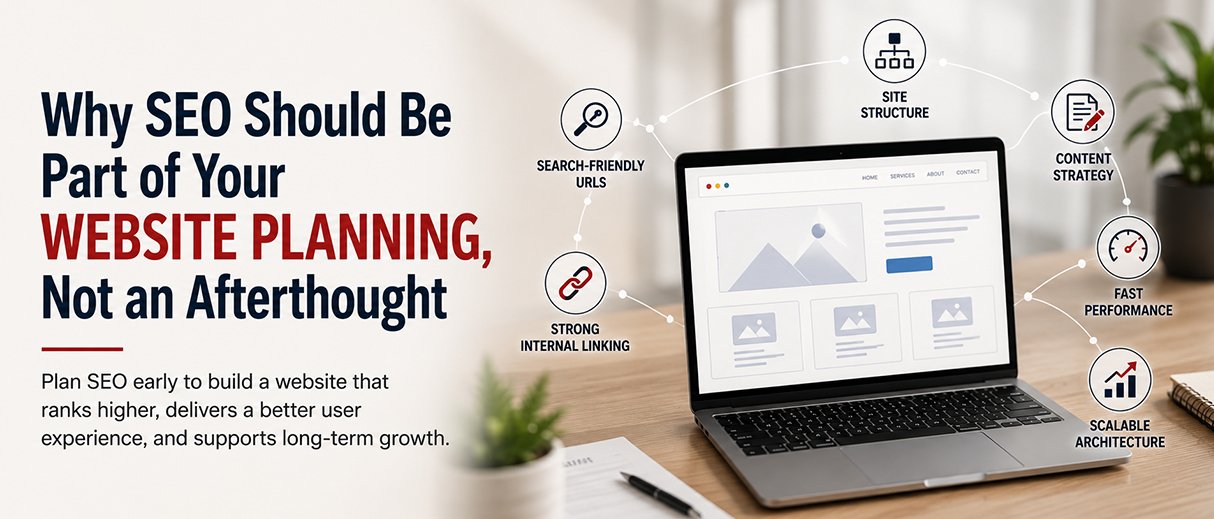
Launching a new website is an exciting milestone for any business. Whether you’re creating your first website or replacing an outdated one, the focus often stays on design, features, and visual appeal. While these elements are important, they represent only part of what makes a website successful.
One of the most common mistakes businesses make is treating search engine optimization (SEO) as something to address after the website is complete. By the time the site goes live, important decisions about its structure, content, and technical setup have already been made. Correcting those decisions later often requires additional time, effort, and budget that could have been avoided with proper planning.
Including SEO during the planning stage allows every part of the website to support both user experience and search visibility from the beginning. Instead of making adjustments after launch, businesses can build a website that is prepared to attract qualified traffic, communicate effectively with potential customers, and support long term growth.
Website planning is much more than deciding how a website should look. It establishes the framework that determines how information is organized, how visitors move through the site, and how search engines understand its content.
Before any development begins, businesses should clearly define:
When these areas are planned carefully, the development process becomes more organized and the finished website is better equipped to support marketing and business growth.
SEO naturally fits into this planning phase because search visibility depends on many of these early decisions.
Many people think SEO begins with keywords, blog posts, or meta descriptions. In reality, effective SEO starts much earlier.
The way pages are organized, how navigation is structured, and how content is grouped all influence how search engines interpret a website. These decisions also affect how easily visitors can find information.
Planning SEO from the beginning helps create:
Making these decisions before development is significantly easier than restructuring an existing website after launch.
A Well Planned Website Structure Supports Better Visibility
Website structure plays an important role in both user experience and organic search performance.
When information is arranged logically, visitors can reach the pages they need without unnecessary clicks. Search engines also benefit because they can understand how different pages relate to one another.
For example, grouping related services under appropriate categories creates a clear hierarchy that benefits both users and search engines.
A poorly planned structure often creates duplicate pages, confusing navigation, and disconnected content. These issues make it more difficult for search engines to crawl the website and can reduce the overall effectiveness of your SEO efforts.
Building the right structure from the beginning creates a stronger foundation for future growth.
Content is often prepared after the website design is complete. Unfortunately, this approach can create unnecessary challenges.
Without a content strategy, businesses may struggle to decide:
Planning content early allows designers, developers, and SEO specialists to work toward the same objective.
Instead of fitting content into an existing layout, the website can be designed around information that customers are actively searching for. This creates a better experience for visitors while improving search visibility.
Search engines reward websites that provide useful and accessible experiences for visitors. Many SEO best practices also improve usability, making the website easier to navigate and more enjoyable to use.
Planning for SEO encourages businesses to focus on elements such as:
These improvements benefit real users first, while also helping search engines evaluate the overall quality of the website.
A website that is easy to explore encourages visitors to spend more time learning about your business and increases the likelihood of meaningful engagement.
Many technical SEO elements are built into a website during development. When these requirements are considered from the beginning, the website is better prepared for search engines once it goes live.
Some of the most important technical considerations include:
Addressing these elements during development is far more efficient than making significant technical changes after launch. It also reduces the chances of encountering performance issues that could affect both users and search visibility.
Many businesses decide to “add SEO later” after the website has already been developed. While SEO improvements can certainly be made after launch, some changes become more time consuming because the website foundation has already been established.
Common issues include:
Fixing these problems often requires additional development work that could have been avoided through better planning.
Starting with SEO in mind allows businesses to reduce unnecessary revisions while creating a stronger digital foundation from day one.
Website development and SEO are often treated as separate services, but they perform best when they support the same objective.
Developers focus on building a reliable, secure, and functional website. SEO specialists help ensure that the website can be understood by search engines while meeting the expectations of potential customers. Designers contribute by creating layouts that are both visually appealing and easy to navigate.
When these disciplines work together throughout the project, the result is a website that is attractive, technically sound, and prepared to compete in search results.
Rather than optimizing a completed website after launch, businesses can create a platform that supports marketing efforts from the very beginning.
A website should continue delivering value long after it is published. Businesses often expand their services, publish new content, introduce additional locations, or target new customer segments over time.
Planning for SEO early makes future growth much easier because the website is already built with scalability in mind.
Benefits of early SEO planning include:
Instead of rebuilding sections of the website later, businesses can continue expanding on a solid foundation.
SEO should never be viewed as the final step in a website project. It influences how a website is organized, how content is structured, and how both visitors and search engines interact with every page.
By including SEO during the planning stage, businesses create a website that supports visibility, usability, and long term growth from the start. Decisions made before development begins often have a lasting impact on future performance, making early planning one of the smartest investments in any website project.
Whether you’re launching a new website or redesigning an existing one, integrating SEO into the planning process helps create a stronger digital presence that is prepared to support your business for years to come.
Yes. Planning SEO before development helps shape the website structure, content strategy, navigation, and technical foundation, making it easier for search engines to understand your website after launch.
A clear website structure helps visitors find information quickly while allowing search engines to crawl and index pages more efficiently. It also supports stronger internal linking and content organization.
Technical SEO includes elements such as website speed, mobile responsiveness, secure HTTPS connections, XML sitemaps, structured data, clean code, and crawlability. These factors contribute to better search performance and user experience.
Yes, but implementing SEO after launch often requires additional changes to website structure, content, URLs, and technical settings. Planning for SEO before development is generally more efficient.
SEO helps businesses improve search visibility, attract relevant visitors, enhance user experience, and create more opportunities for qualified leads through organic search.
Book a free strategy call and let's talk about your goals.
Book Free Strategy Call